

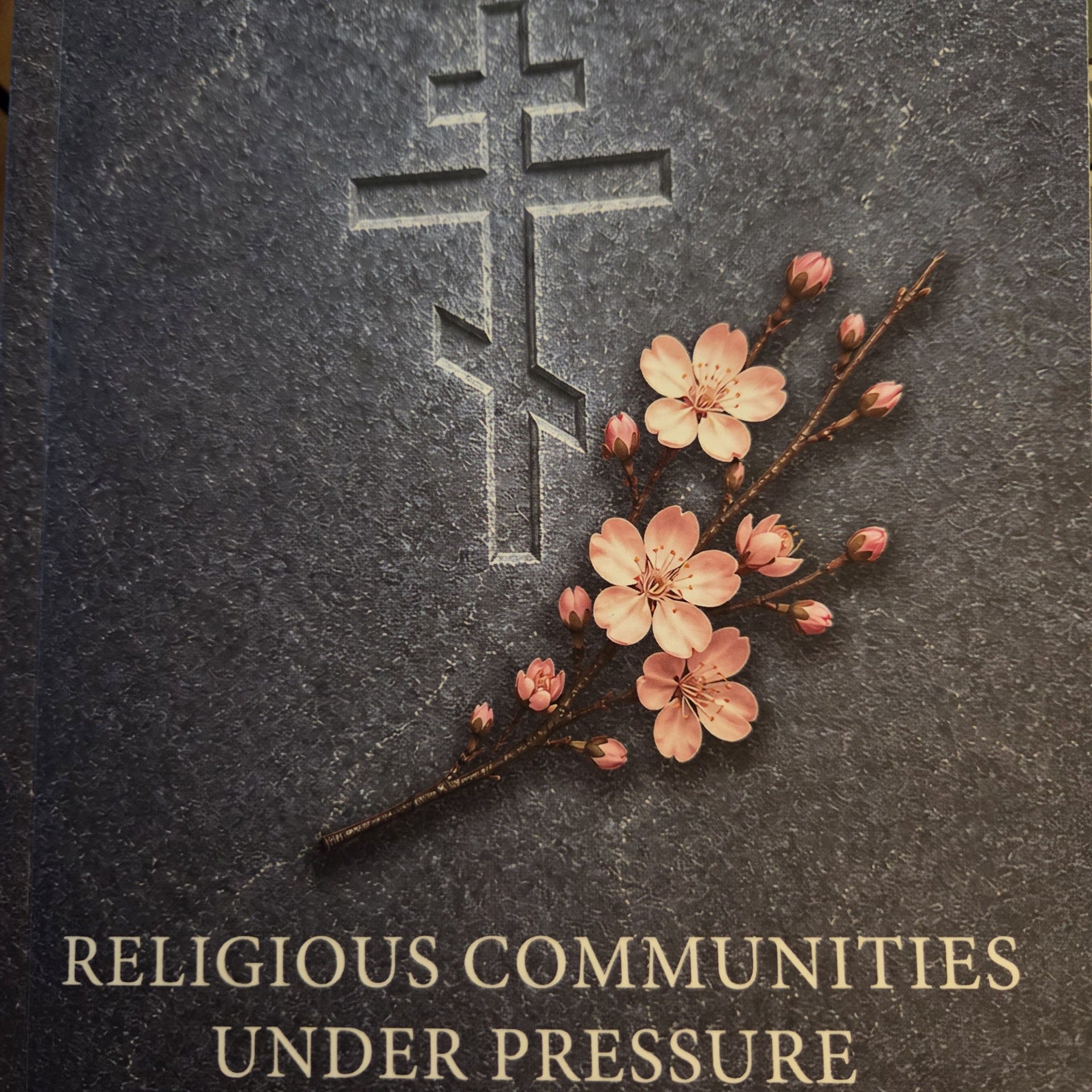
As a former translator and archivist at Keston College, the Center for the Study of Religion Under Communism, I welcome this new contribution Religious Communities Under Pressure: Documenting Religious Persecution in Russia 2022-2026 by Sergei Chapnin to the collection of evidence of the persecution of Christians in the Russian Federation. Through his book, Chapnin continues the work of Keston, Amnesty International, the UN, and other organizations in documenting Russia’s malign treatment of clergy and laity who speak the truth and do not blindly follow the official stance of the government and the state-controlled Church. From the foreword by Rowan Williams, the former Archbishop of Canterbury, to the appendices, Chapnin delivers much-needed facts and insights into the most current situation of believers dissenting from the official stance on Russia’s war against Ukraine from February 2022 to June 2026.
The book logically progresses from an introduction that explains his research methods and data to individual cases of persecution as results of the oppressive practices of the Russian government and the Moscow Patriarchate, and concluding with a way forward. The prologue summarizes the book and includes an executive summary along with methods, key findings, and recommendations. Chapter 1 is an introduction that describes the context of the problem. Chapter 2 describes the Church as an instrument of war, while Chapter 3 explicates the coordinated mechanisms that the Russian state uses against religious dissenters, including examples of victims such as journalist Ksenia Luchenko (now designated as a foreign agent) and preacher Christolyub Vegan, who perished in custody. Chapters 4 and 5 describe the coordination between church and state, and church mechanisms of suppression, including several case studies. Chapters 6 and 7 delineate persecution across religions and examples of resistance and emigration. The remaining chapters discuss the reactions of international institutions and recommendations for effective responses to Russia’s persecution.
The eight appendices an appeal by members of the Orthodox Church in America for an end to the war and an open letter to the 2025 All-American Council. There are also lists of the persecuted under various categories, including religious organizations that have been declared illegal and a list of clergy who have been received into other Churches. The final appendix includes the principal resources that Chapnin used.
Religious Communities Under Pressure: Documenting Religious Persecution in Russia 2022-2026 by Sergei Chapnin is an essential volume for a current view of the repressive actions of the Moscow Patriarchate led by Patriarch Kirill and the Russian state. Readers will find the research solid and convincing, and they will be disturbed by the limited reactions from Churches around the world. The book is not an “easy read” because of the concerning content and to some extent because of its terse presentation. But reading it is a requisite for all of us who are concerned for our fellow believers in Russia and Ukraine.
It is a profound tragedy of our modern era when institutional faith—which is meant to be a sanctuary of peace, truth, and moral clarity—becomes co-opted as an instrument of war and suppression. Sergei Chapnin's work, as highlighted here, serves as an uncomfortable yet vital mirror for society. It reminds us that true courage often lies with the dissenting minority, the believers and journalists who risk their freedom and safety to refuse blind obedience to state-controlled ideologies. This book is a sobering testament to the resilience of human conscience against the machinery of tyranny.
Jacqueline, thank you for this careful and generous review. It means a lot to me that the book was read by someone who worked at Keston. For decades Keston kept the record of what believers in the Soviet Union went through while the state tried to erase it, and I see this book as a small continuation of that work.
You're right that it isn't an easy read. A report has to stay close to the documents. I've been thinking about writing a more personal book about the people behind them, though for now it's only a plan.
With gratitude,
Sergei